
On this page
What these guards are
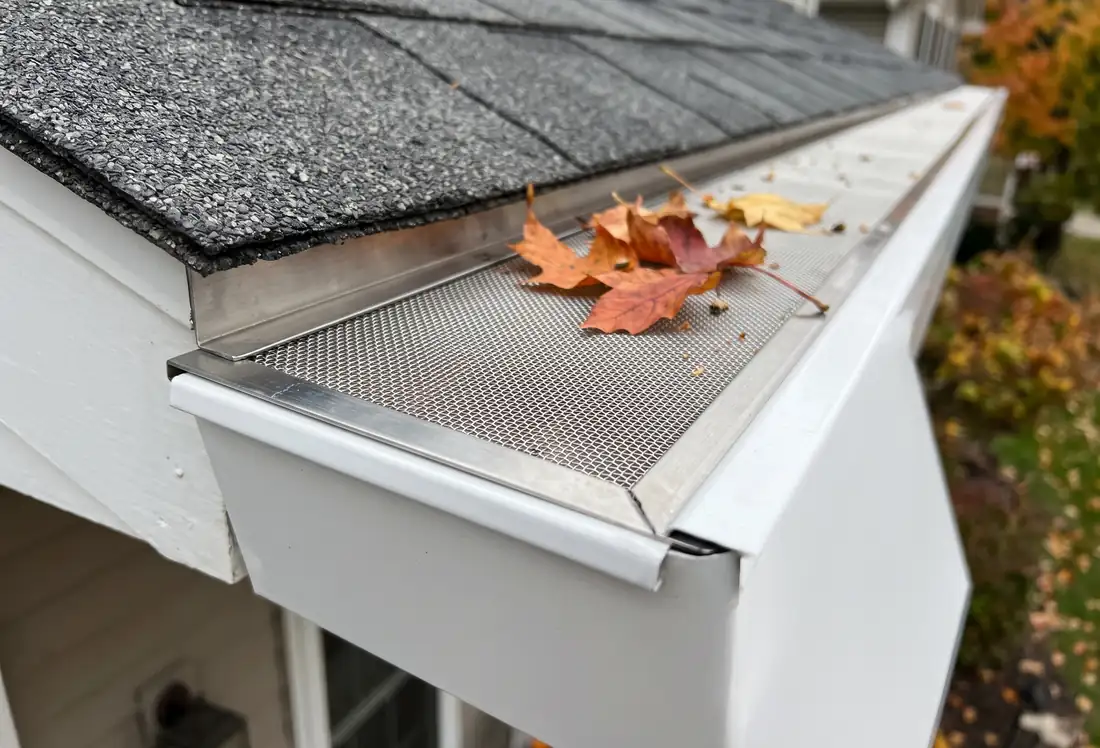
Screen guards are perforated aluminum, steel or plastic, or expanded metal mesh, laid over the trough. Reverse-curve guards, also called hoods or helmets, are solid covers with a rounded front; water clings to the curve and drops into a slot while leaves slide off.
How they compare
| Screen | Reverse-curve | Micro-mesh | |
|---|---|---|---|
| Large leaves | Stops | Sheds | Stops |
| Seeds and catkins | Many get in | Some enter slot | Stops |
| Pine needles | Poke through | Mostly shed | Stops |
| Very heavy rain, steep roof | Good | Can overshoot | Good |
| Cost | Lowest | Middle to high | Middle to high |
Where they make sense in Franklin
- Screens: one-story houses under big-leaf trees, on a budget.
- Hoods: leaf-heavy lots with moderate roof pitch.
- Micro-mesh: where seeds, catkins and needles are the problem. See micro-mesh gutter guards.
Trees and guard choice
| Tree over the roof | Screen | Reverse-curve | Micro-mesh |
|---|---|---|---|
| Oak | Good for leaves | Good | Best overall |
| Maple | Seeds get through | Seeds in slot | Best |
| Sweetgum | Balls sit on top | Shed | Sit on top |
| Pine or cedar | Needles get through | Mostly shed | Best |
| Dying ash | Twigs stopped | Shed | Stopped |
Fitting
- Repair and clean the gutters first.
- Fit screens to the gutter lip and under the drip edge or to the fascia.
- Fit hoods to the fascia and gutter at the roof's pitch.
- Finish corners and ends.
- Test with water.
Heavy rain and hoods
Middle Tennessee storms can drop rain very fast; Nashville's records include nearly an inch in five minutes. On steep roofs, water can jump a hood's curve in those bursts. Hoods work best on moderate pitches with the gutter at the correct height.
Guard terms
| Term | Meaning |
|---|---|
| Screen guard | Perforated or expanded metal cover with larger openings |
| Reverse-curve guard | A solid hood that curls water around its nose into a slot |
| Gutter insert | Foam or bristle filler laid inside the trough |
| Micro-mesh guard | Fine stainless mesh on a frame that stops seeds, needles and grit |
| Drip edge | Bent metal strip at the edge of the roof deck that steers runoff into the trough |
Seasonal care
| Season | Task |
|---|---|
| Spring | Brush seeds and catkins off screens; check hood slots |
| Summer | Check after storms for dents or lifted panels |
| Fall | Clear leaves resting on top |
| Winter | Check for sweetgum balls and needles |
Cost and lifespan
| Type | Relative cost | Typical life |
|---|---|---|
| Plastic snap-in screen | Lowest | Short; heat and sun break it down |
| Aluminum or steel screen | Low to middle | Medium |
| Reverse-curve hood | Middle to high | Long |
| Stainless micro-mesh | Middle to high | Long |
DIY screens
Snap-in screens from a home center can work on a one-story house under big-leaf trees. Buy metal rather than plastic, match the gutter size, and check that the back edge sits under the drip edge or against the fascia without lifting shingles. Leave two-story work and hoods to a contractor.
When to switch types
If screens let maple seeds and catkins through every spring, or hoods let water overshoot in storms, switching to micro-mesh on the worst eaves is often the fix.
Hood slots and cleaning
The slot behind a hood's curve collects seeds, pollen and grit. Over time, that slot can clog and water runs over. Ask how the hood is cleaned and whether it lifts off.
Questions to ask
- Is the screen metal or plastic?
- How does it attach, and does it lift shingles?
- How are corners and valleys handled?
- How are panels replaced after hail?
Choosing between them
If big oak leaves are the only problem and the house is one story, a metal screen is a sensible, low-cost choice. If the lot also drops seeds, catkins or needles, micro-mesh is usually the better buy. Hoods suit leaf-heavy lots with moderate roof pitch, but on steep roofs in Middle Tennessee storms they can let water jump the curve.
Screens on older Franklin houses
On brick ranches and older two-story homes with K-style gutters under big oaks, a metal screen is often the first guard owners try. It keeps the largest leaves out and is easy to lift for a look underneath. The trouble starts in spring, when maple seeds and oak catkins slip through and pack the trough beneath the screen, where they are harder to see and clear. If you find yourself lifting screens every spring, mesh on the worst eaves is the next step.