
On this page
- Thompson's Station in brief
- About Thompson's Station
- Houses and buildings
- Storms
- Drainage on acreage
- Booking a contractor in Thompson's Station
- Which gutters suit houses in Thompson's Station?
- A gutter calendar for Thompson's Station
- How much gutter does a Thompson's Station house need?
- Gutter jobs that come up in Thompson's Station
- Roads, water and landmarks in Thompson's Station
- Signs a Thompson's Station house needs gutter work
- What a visit usually involves
- Before you call about Thompson's Station
- Nearby
Thompson's Station in brief
| Where | Between Franklin and Spring Hill |
| Named | After Dr. Elijah Thompson, who gave land for the railroad in 1855 |
| Incorporated | August 1990 |
| Population | 7,485 in 2020 |
| History | Battle of Thompson's Station, March 5, 1863 |
| Main gutter issues | Wind, long rural eaves, outbuildings, drainage |
About Thompson's Station
Thompson's Station takes its name from Dr. Elijah Thompson, who gave land for the railroad in 1855; it was known earlier as White House and Littlebury. The town incorporated in August 1990 and had 7,485 residents in 2020. The Battle of Thompson's Station was fought there on March 5, 1863, and historic homes such as Homestead Manor remain.
Houses and buildings
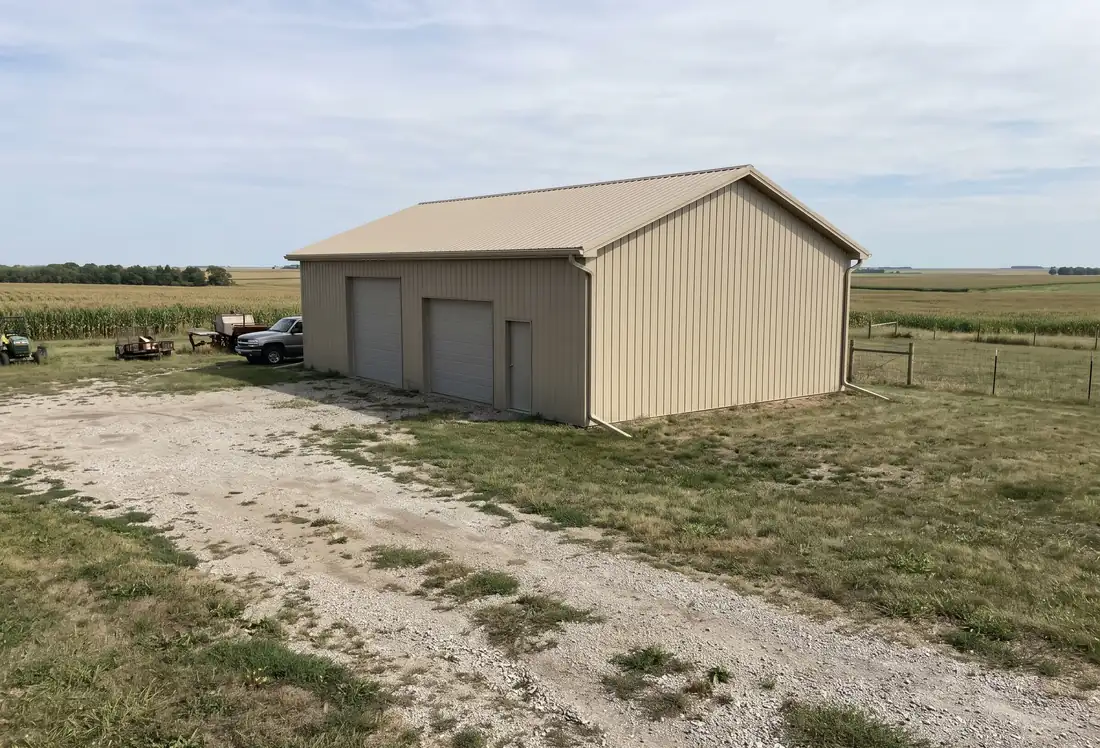
The town has newer subdivisions with two-story homes and steep roofs, alongside older farmhouses, barns and shops on larger tracts. Outbuildings often have long eaves and either no gutters or simple steel ones.
Storms
The National Weather Service documented damaging microbursts in Thompson's Station and Spring Hill on June 19, 2019. Open land lets straight-line winds build, and long eaves catch them.
Drainage on acreage
On larger lots, downspouts can carry water well away from the house, toward swales or open ground. On barns and shops, gutters keep water from undercutting the foundation and washing out gravel aprons.
Booking a contractor in Thompson's Station
Calls about Thompson's Station go to an independent gutter contractor who covers Williamson County. Some charge a trip fee for addresses farther from Franklin, so it is fair to ask on the call. After a storm that hits several towns at once, contractors book in the order calls come in, so ring early and keep your photos. Seamless runs are formed on a trailer next to the house; if the drive is long, steep or gated, say so.
Which gutters suit houses in Thompson's Station?
Newer homes here usually suit 6-inch seamless aluminum; barns and shops often take steel box or large K-style gutters.
| Typical choice in Thompson's Station | |
|---|---|
| Gutter | 6-inch K-style on homes; box or 6-inch on outbuildings |
| Metal | .032 aluminum; Galvalume on barns |
| Downspouts | 3x4 rectangular |
| Fastening | Hidden hangers; heavier straps on metal buildings |
| Guards | Under tree lines |
| Cleaning | Once or twice a year |
| Where water goes | Toward swales and open ground, well away from buildings |
| Watch for | Wind damage, long eaves, washed-out aprons |
| Rules | Gutter replacement rarely needs a permit; ask the contractor, and check with the local building office for drainage or structural work |
A gutter calendar for Thompson's Station
The nearest official climate site, Nashville, averages 50.51 inches of precipitation a year, with May the wettest month at about five inches. Snow is light, around 4.7 inches in a typical winter, but ice storms happen. Here is how that plays out in Thompson's Station.
| Months | What to look at in Thompson's Station |
|---|---|
| March–April | Spring storms arrive; check outlets, corners and anything loosened over winter |
| May | Usually the wettest month; clear seeds from fence-line trees before it and watch for overflow |
| June–August | Thunderstorms, wind and hail; look for dents, lifted runs and storm debris |
| September–October | Good months to book replacement; check extensions and grading |
| November–December | Clean after leaves from tree lines; flush every downspout |
| January–February | Cold snaps and the odd ice storm; watch long north eaves; never chip ice off a gutter |
How much gutter does a Thompson's Station house need?
Gutters are priced by the foot, so the eave length sets most of the cost. Below are typical lengths for houses here, multiplied by national ranges from Angi. They show the scale of a job; they are not quotes.
| House | Typical eave length | Gutter | National range installed |
|---|---|---|---|
| Two-story subdivision home | 190–250 ft | 6-inch seamless aluminum | about $2,280–$4,500 |
| Farmhouse | 150–220 ft | 5-inch seamless aluminum | about $1,350–$2,860 |
| Barn or shop | 80–160 ft | 6-inch seamless aluminum | about $960–$2,880 |
Take-down of old gutters, fascia carpentry, extra downspouts, buried lines and guards are priced on top.
Gutter jobs that come up in Thompson's Station
| House | What goes wrong | What usually fixes it |
|---|---|---|
| Subdivision home | Overflow below valleys | Diverters, 6-inch |
| Farmhouse | Old gutters, fascia rot | Replace, fascia repair |
| Barn or shop | No gutters, eroded apron | Steel gutters and downspouts |
| Any home after wind | Lifted gutter ends | Rehang with closer hangers |
Roads, water and landmarks in Thompson's Station
- Roads: Columbia Pike (US 31), Thompson's Station Road, Critz Lane
- Landmarks: Homestead Manor
- Neighbors: Spring Hill, Berry Farms, Leiper's Fork
Signs a Thompson's Station house needs gutter work
- Water sheets over the front of the gutter in moderate rain, or only below one valley.
- Stains, peeling paint or soft wood along the fascia.
- Gaps between the gutter and the roof edge, or runs that dip between hangers.
- Mulch and soil washed out at the end of a downspout.
- A damp or musty crawl space or basement after storms.
- Seedlings or grass growing in the trough.
What a visit usually involves
The contractor walks the house, looks at each run from the ground and a ladder, checks the fascia and drip edge, and notes where every downspout lets go. They then explain what they found and give their own written quote, usually with options such as repair, partial replacement or a full new system. Nothing is decided on the call; you choose after seeing the quote.
Before you call about Thompson's Station
- Note which side of the house the problem is on, and whether it happens in every rain or only in downpours.
- Look at where each downspout releases water and whether the ground runs back toward the house.
- After a storm, photograph the damage and write down the date.
- Know how many stories the house has and whether there is a basement, crawl space, deck or porch roof.